Sleep plays an important role in the daily lives of people and horses, allowing the body to rest and recover. Sleep also involves the consolidation of memory traces, which is important for remembering and learning. Sleep is equally important for horses to function properly. We might therefore ask ourselves: how does a horse sleep? When does a horse lie down, and when do horses sleep standing up? Learning about these aspects of equine sleep allows us to understand their mental and physical condition better, while also arousing our curiosity about how horses sleep. The sleep of these animals is an interesting subject, particularly because it is important for maintaining horses' health and allowing their bodies to recover properly.
Sleep plays an important role in the daily lives of people and horses, allowing the body to rest and recover. Sleep also involves the consolidation of memory traces, which is important for remembering and learning. Sleep is equally important for horses to function properly. We might therefore ask ourselves: how does a horse sleep? When does a horse lie down, and when do horses sleep standing up? Learning about these aspects of equine sleep allows us to understand their mental and physical condition better, while also arousing our curiosity about how horses sleep. The sleep of these animals is an interesting subject, particularly because it is important for maintaining horses' health and allowing their bodies to recover properly.
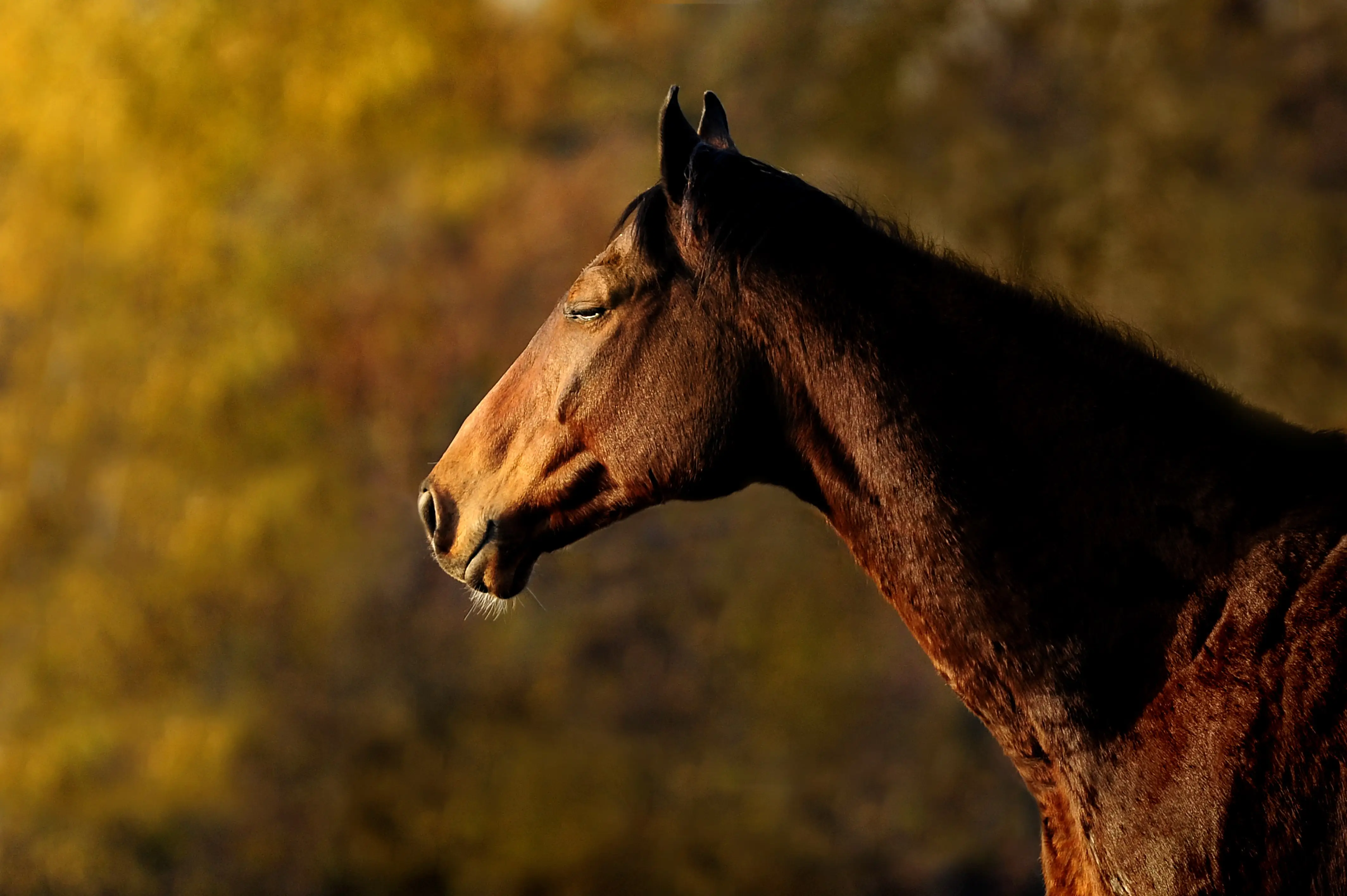
Equine sleep, like human sleep, can be divided into distinct stages. The position in which horses sleep depends on the stage they are currently in. A horse experiences slow-wave sleep (NREM) and paradoxical sleep (REM). During slow-wave sleep, the horse's eyes are half-closed, its neck muscles relax, and its head and ears droop slightly. Horses sleep standing up during NREM sleep. During REM sleep, their muscles relax, which is why horses cannot enter REM sleep while standing. Horses can enter paradoxical sleep while lying down. A horse lies down especially when it feels safe and at ease. The REM stage also allows dreams to occur. Being able to enter all stages of sleep allows truly deep rest. This kind of sleep is valuable for a horse and allows it to regain strength for the next day.
Have you ever wondered why horses sleep standing up? It is a fascinating behaviour that seems to contradict our own need to sleep lying down. However, there is a logical explanation for this phenomenon. As an animal that can potentially fall prey to a predator, the horse has developed the ability to sleep standing up as a form of defence against predators. This allows it to react instantly and flee when its life is threatened, avoiding potential danger. In addition, horses have a particular leg structure and a unique mechanism for locking the stifle joint, allowing a horse to stand and maintain an upright position effortlessly. While the forelimbs bear weight simultaneously, the hindlimbs take turns resting. The stay apparatus of the hindlimb has a limited number of points that stabilise the limb during a nap, so the animal shifts its weight from one leg to the other. Although a horse can sleep lying down, it often chooses to sleep standing up as an instinctive form of self-defence, so that it is ready to flee at any moment. A horse's sleep is fascinating, isn't it?
This is one of those interesting aspects of animal behaviour that can amaze many horse lovers. Yes, horses can sleep with their eyes either closed or open. This phenomenon is related to their ability to divide sleep into two stages. When a horse sleeps standing up during slow-wave sleep, its eyes remain half-closed. Open eyes during sleep are rooted in their evolutionary heritage, giving horses the ability to respond instantly to their surroundings even while resting. This remarkable adaptation means that horses are ready to flee from a possible threat even while asleep. It is therefore worth understanding this fascinating adaptation, which makes these animals even more intriguing.
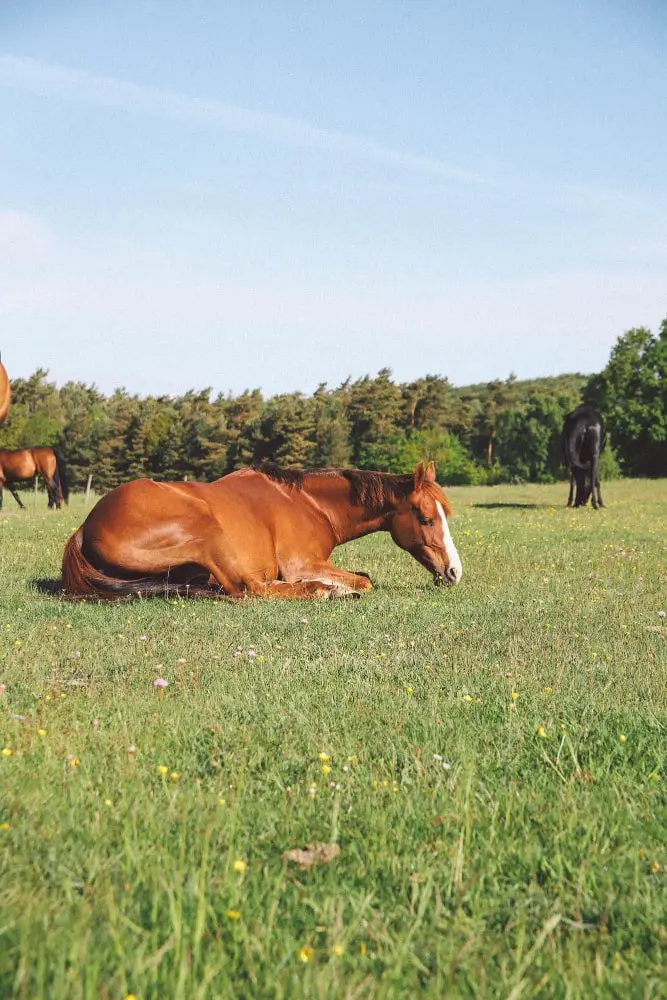
How long horses sleep depends on several factors. The duration of a horse's sleep depends primarily on its age and individual needs. Adult horses typically sleep for three to five hours per day. An adult horse sleeps for considerably less time than young animals. Young horses, especially foals, need longer periods of sleep. This is extremely important while the animals are growing. A horse's need for sleep decreases after approximately the third month of life. Older horses need less sleep, but their shorter sleeping time is physiological and does not negatively affect their health. Horses usually sleep at night, between eight in the evening and five in the morning. Around midday, horses like to take short naps.
Explore categories that may interest you after reading this post:
In a world full of the mysteries and charms of equine sleep, it is worth recognising how important sleep quality is to the health of these wonderful animals. Watching their calm posture while asleep, we can realise that sleep not only allows the body to rest, but is also a key element in maintaining a horse's mental health. Just as in humans, healthy sleep in horses affects the overall condition of their bodies, strengthening the immune system and regulating metabolic processes. That is why providing comfortable sleeping conditions, a suitable position and peaceful surroundings becomes not only a matter of aesthetics, but also a priority for these animals' welfare. Watching horses during their nightly rest, we not only admire their natural grace, but also realise how important it is for every animal to have a peaceful haven in which to recover. The way a horse sleeps is a pleasant thing to observe. Let us remember, however, that the quality of horses' sleep is a key part of caring for a horse's health and well-being.
check_circle
check_circle


