
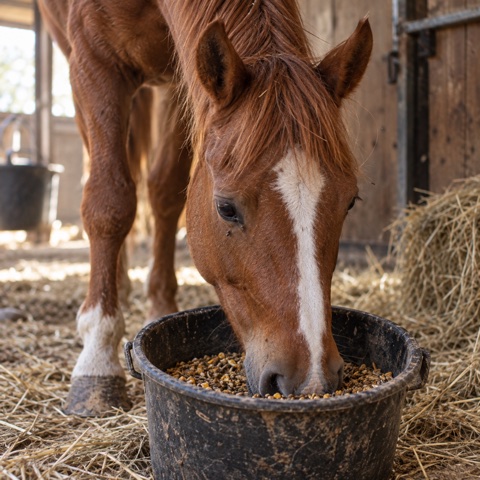
Bentonite is composed of volatile volcanic ash, and used internally supports the intestinal system in the elimination of toxins. The wild animals instinctively licked the clay, which was part of their daily diet.
Stock for 10 days.
The basic component of bentonite is montmorillonite, which is a mineral from a cluster of silicates, which belongs to the minerals andlasts (a group of smectites). It has the properties of binding toxins, it also provides minerals.
When to use?
- when feeding poor feed quality
- when poor quality hay is served
- in horses with diarrhoea
- externally to skin lesions
Bentonite action:
Interruption -has the ability to absorb water. Binding the water swells and simultaneously absorbs some toxins found in the gastrointestinal tract, which is significant in the case of toxic background diarrhoea. Hydrated montmorillonite can increase its volume even several times. The secretion of excess fluid through the gastrointestinal wall is one of the mechanisms of diarrhea, hence the use of bentonite can reduce its course.
Toxin binders - has a strong negative charge, which is why it attracts many positive-charge toxins to it. When exposed to toxins or heavy metals, it absorbs them, simultaneously releasing minerals contained in it into the body. Especially common in horses are mycotoxins. They are found in hay or grain. Bentonite, thanks to its unique structure, binds such mycotoxins as aflatoxins, deoxynivalenol, zearalenone, and also controls radionuclide contamination.
Mycotoxins are metabolites of toxin-forming fungi, commonly referred to as moulds. They are not only found in fodder, but also in litter. Their intake causes so-called mycotoxicosis, or diseases specific to livestock (e.g. liver damage, kidney damage, diarrhoea), respiratory problems. Mycotoxins also have a non-specific effect, which is manifested by a reduction in the use of feed and a general deterioration of well-being and health. Studies have shown that storage conditions, in particular moisture, have a major impact on the presence and concentration of microscopic fungi toxins in the hay.
Lowering the pH of stomach acids - by high calcium content, the alkaline reaction of bentonite will reduce the acidity of digestive juices, which may be beneficial for horses prone to stomach ulcers.
External use – bentonite processed in water forms a clay that can be used as a cover as a cover for abrasions, abscesses, burns, bites, hoofs and other external wounds. It accelerates healing and soothes inflammation. It will work perfectly as a wrap on allergic lesions, as it reduces itching and swelling after biting insects or as a result of allergic irritation.
Composition: Natural calcium bentonite - montmorillonite
Dosage:
Konie large (500 kg):
- 15 to 30 g twice a day for preventive use
- for diarrhoea, depending on the severity of the symptoms, the dose of 15g can be used several times a day at several hours intervals, taking care of water supply and electrolytes.
Little horses and ponies proportionally less.
One scoop contains approximately 15g of the preparation.
External use:
- as a cover for abrasions, abscesses, burns, bites, hoofs and other external wounds. It accelerates healing and soothes inflammation.
- as a cover for allergic lesions, e.g. itchy places (tail, belly, chest, mane), as well as swelling after an insect bite
- can be applied in the form of clay on tendons after training
NUBA EQUI PAWEŁ PĘKALA
Krąg 27
83-200 Starogard Gdański PL
NUBA EQUI PAWEŁ PĘKALA
Krąg 27
83-200 Starogard Gdański PL


check_circle
check_circle






















Your review appreciation cannot be sent
Report comment
Report sent
Your report cannot be sent