


from zł28.99

Lowest price in the 30 days before the discount: zł91.00
*** Valuation due to the expiry date of 22.10.2026 ***
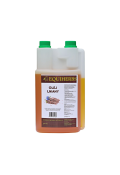
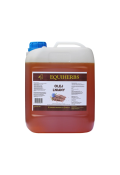
Lecithin is a mixture of fatty compounds. Its main component is phospholipids, which are a building block of cell membranes in the body. They are found in each cell of the body and are essential for its proper functioning. Lecithin also contains sterols, glycolipids, triglycerides and a small amount of fatty acids.
Protection of stomach walls - An extremely valuable feature of lecithin is the way it interacts with water and lipids. It contains hydrophobic compounds with fat affinity and hydrophilic compounds with water affinity. Under acidic conditions, lecithin decays into a mixture of reactive phospholipids; it repels hydrophilic substances such as gastric acid, away from the stomach wall, thus protecting a sensitive mucous membrane. This gives potential to create a short-term physical barrier between stomach walls and stomach acids, also in the area of the stomach bottom. This property can be a great support for the stomach in horses prone to ulcers.
Metabolism and cell regeneration - Fosfolipidy play an important role in the metabolic processes of cells and organs. They ensure the permeability of cell membranes so that they can transport nutrients and metabolites. They are crucial for cell communication, as well as their changes as receptors of many hormone enzymes and growth factors. They take part in protein synthesis, cell regeneration and the process of producing energy in the body. The primary action of phospholipids is to accelerate the regeneration and stabilisation of cell membranes, as well as inhibit peroxidation (oxidation) of lipids. This is important in repairing damage to cell membranes caused by stressogenic factors.
Protection and regeneration of the liver - The great potential of phospholipids contained in lecithin is to protect the liver, having potential for regeneration for damage, fat and fibers of this organ.
Digesting - Lecithin plays an important role in digesting fats and absorbing fat-soluble vitamins A, D, E. Its proper amount in the diet has a positive effect on the body's immunity.
Nervous system support - Neuroprotective activity is an important asset of phospholipids. These lipids, together with polyunsaturated fatty acids, constitute the primary building blocks of tissues in the nervous system. Lizyna, through choline content, contributes to the formation of myelin shields to protect nerves from damage.
Muscle work and thought processes - Lecithin is converted into acetylcholine, a substance that transmits nerve impulses. Participating in the transmission of signals between nerve cells and muscle has an effect on exercise performance and muscle tissue strength. Acetylcholine is one of the most important neurotransmitters by which it can affect cognitive processes, memory and concentration ability. Choline is the primary building block of acetylcholine, a substance that mediates in the nervous impulses of the body.
Skin and hair - Lecithin can prevent skin dryness and positively affects the quality of the hair cover.
intestinal support - Studies on poultry have shown that supplementation with lysolecytin (a lecithin derivative) has a positive effect on intestinal epithelials and increased intestinal villi, which can improve digestibility and the use of food. It also has the potential to improve the health of horses with bowel problems; inflammatory conditions, mortic conditions, hypersensitivity.
When to use:
- in horses suffering from stomach ulcers
-in a period of increased training and stress
- when the nervous system needs backup.
- in horses with liver problems
- with vitamin deficiency B4 (cholines)
- as a support for skin and hair condition
- in horses with neurological problems
- against non-steroidal anti-inflammatory drugs (NSAIDs)
-helping in older horses
The role of lecithin in the body:
-is the building block of all the cells in the body
-helps to strengthen the lining of the stomach at the level of the cell membrane, which can contribute to ulcer healing
-has a significant effect on liver health effectively supporting its regeneration
-helps to maintain normal mucosal membranes
-takes part in metabolism processes, especially fats
-important for proper transmission of signals in the nervous system
Complementary feed.
DOSING:
Konie large (500 kg)*:
-25 g lecithins daily in prophylactic supplementation, preferably separated into individual meals
-to extend gastric protection after treating ulcers: 50 g lecithins per day by 4 weeks, then 30-40 g by 4-6 weeks (distribute to meals)
"Little horses and ponies are proportionally less."
The attached 50 ml cup contains approx. 25g product.
Application:
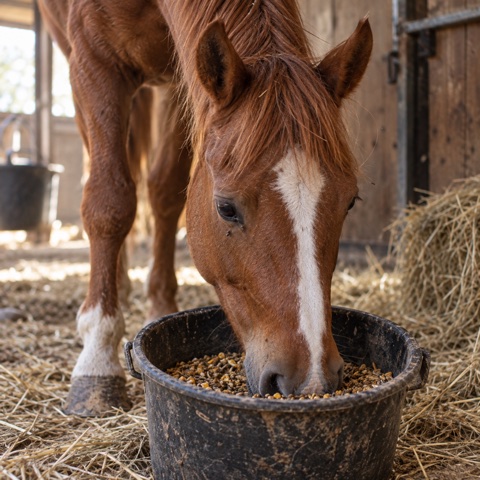
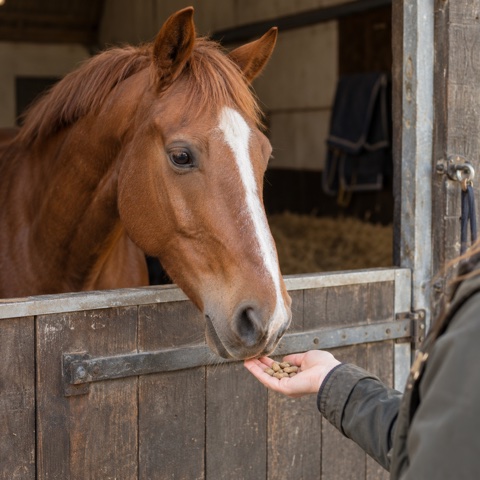
Add to feed. It may be moistened immediately prior to administration.
Store in a dry and cool place. After use, close tightly.
99% lecithin obtained from soya, natural aroma
NUBA EQUI PAWEŁ PĘKALA
Krąg 27
83-200 Starogard Gdański PL
NUBA EQUI PAWEŁ PĘKALA
Krąg 27
83-200 Starogard Gdański PL


check_circle
check_circle























Your review appreciation cannot be sent
Report comment
Report sent
Your report cannot be sent