
Vitamin E is a biological antioxidant that protects cells from free radicals and inhibits their reproduction. Free radicals contribute to damage to cell membranes and cell genetic material, which accelerates aging processes, reduces immunity and slows regeneration. The formation of free radicals is a process naturally occurring in each organism. When the balance between free radicals and antioxidants is preserved the body functions properly. A large amount of free radicals appear in the body at great physical effort, strong or long-term stress, through polluted air. These factors increase the demand for antioxidants.
In addition, vitamin E is an important cofactor in the maintenance and repair of connective tissue, collagen, carnitine and hundreds of other physiological processes.
It maintains adequate cell membrane permeability and prevents blood clots, having a significant effect on the undesirable clumping of the tiles. It also affects muscle performance, lowers the level of bad cholesterol in the blood and supports the functioning of vision. Improves skin condition by affecting its elasticity and hydration. It is important for breeding horses as it supports ovulation and proper development of the foetus.
Supplementation of vitamin E is particularly important for horses without access to pasture as well as for all horses outside the pasture period. Its main source in the diet of horses are green plants, however, the content of this vitamin in the hay falls drastically after several weeks of mowing. Its content in dry farm feed is very low.
Vitamin E is stored in fatty tissue, so horses with too little body weight are more vulnerable to its deficiency.
When to use:
-in vitamin E deficiency states
- for horses not having access to lush pastures, especially for foal mares and foals
- in a non-paste period
-using high-fat diets, adding oil to the daily feed dose
- in horses in heavy training, undergoing a long-term effort at a high level (rays, looms)
-after surgery and surgery (in the case of planned treatments it is worth to introduce supplementation a few days before)
-in stressful situations.
- with recurrent nosebleeds
- with acute RAO symptoms (asthma)
The role of vitamin E in the body:
- a strong antioxidant, fights free radicals
-effects on the body's immunity
-it affects muscle function, prevents them from getting tired after training
Symptoms and effects of deficiency:
-low immunity
- lack of energy and willingness to work, fast fatigue
-white muscle disease in foals
- neurodegenerative diseases
- heart and skeletal muscle disease
- tumour formation
Feeding directions
Large horses (500 kg)* not receiving vitamin E from any source:
- 4 - 8g daily for non-working horses, the higher dose should be divided into two meals
- 12 - 20g daily for sports horses and with increased demand (distribute the dose into two meals)
Large horses (500 kg) receiving vitamin E in feed / primary supplementation, but with a temporary higher demand, e.g. with allergic symptoms, stress situations, disease, extensive wounds, invasive veterinary procedures - 4 - 8g daily.
"Little horses and ponies are proportionally less."
Application:
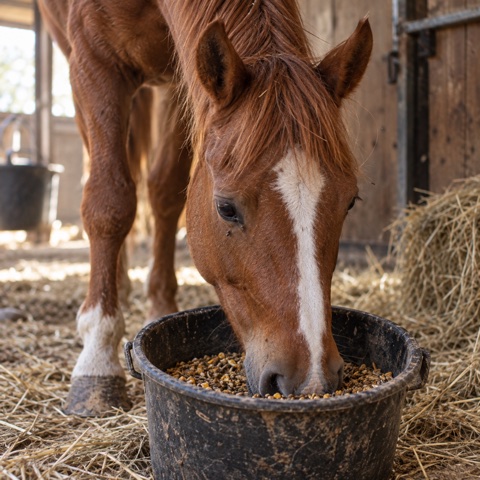
Add to feed. Vitamin E is soluble in fats and is better absorbed in their presence. It's worth giving with oil. It may be moistened immediately prior to administration.
Store in a dry and cool place. After use, close tightly.
The attached 10 ml scoop contains approx.8g product and delivers 1.000 IU vitamin E.
Complementary feed.
Composition: Tocopheryl acetate, Medium, Natural Aroma
The attached 10 ml scoop contains approx.8g product and delivers 1.000 IU vitamin E.
Complementary feed.
NUBA EQUI PAWEŁ PĘKALA
Krąg 27
83-200 Starogard Gdański PL
NUBA EQUI PAWEŁ PĘKALA
Krąg 27
83-200 Starogard Gdański PL


check_circle
check_circle














Your review appreciation cannot be sent
Report comment
Report sent
Your report cannot be sent