


Feed intended for three-year-old horses, starting training and still growing. This time is very difficult for horses because there are many changes in their lives.
During this period, the horse usually:
- is detached from the herd.
-has first close contact with man; is tamed, learned to bind, administer legs and other basic activities
-changes the stable.
- Starts working.
-is transferred from the maintenance of the free-run do stajni, so its day schedule changes
-changes food; has introduced new products to the diet, changes its feed intake mode
These changes are mentally and physically incriminating. Long - term or often felt mental tension has an adverse effect on health. It can lower immunity, increase the symptoms of autoimmune diseases or cause mental disorders, which may be a symptom of frequent injury, aggression, hyperactivity or apathy.
During training, there is a physical burden on the body, which he is not used to. This results in an increased need for regeneration.
In the context of feeding this group of horses, the fact that the horse is still growing is an extremely important factor. It is estimated that the horse skeleton is eventually mineralized only a wheel 5 years of age and even males 8 years of age. The muscle tissue also grows significantly, but one must be aware that development still includes all tissues of the body.
The three above aspects generate exceptional needs of this group of horses, which is why Nuba Grow3 Musli was created. Ensures optimal proportions and amounts of nutrients balanced according to the latest standards and tests. Thanks to the variety of components in the composition, they are supplied in a natural form as well as additives with great digestibility. Grow 3 Musli features slow-release energy, an increased amount of nutrients conducive to regeneration, supporting the nervous system, muscle and immune system, as well as the optimal supply of macronutrients necessary for the development of the skeletal system. Feed used in accordance with the recommended dosage does not require any additional general supplementation (in healthy horses, in the absence of previously identified significant shortages - if deficiencies have been previously identified, they may need to be supplemented).
Key features:
-freely released energy in the amount needed to work to ensure that the horse has the strength to meet the training requirements, but at the same time does not show hyperactivity
-relatively low starch content
-high levels of protein from natural components with a very good amino acid profile, which has a decisive impact on the formation of new tissues, including the growth of muscles
-addition of lysine - a limitative amino acid exogenous, which improves the absorption and use of protein by the body
-calcium, phosphorus and magnesium are supplied from organic sources as well as well as well-absorbed additives to support the proper development of the bone system
- zinc micronutrients, copper and selenium in Nuba Musli feed have the form of chelates, which increases their digestibility
-vitamin A is supplied in the form of beta carotene, which prevents its overdose
-support of the nervous system by increased amounts of magnesium, B vitamins in yeast, as well as probiotics
-feed is based on alfalfa, known for its tastyness, good quality fiber, excellent absorbable protein and calcium, which is particularly important in breeding horses
-a large content of thermally micronized soya, which is a source of protein with a good amino acid composition. Micronising neutralizes the anti-nutrient ingredients contained in the soya, and improves its digestibility and digestibility - such grains are also more tasty
-large share of rice bran rich in gamma orysanol - an antioxidant agent protecting muscle cells, which affects their work, regeneration and expansion
- the addition of herbs to support immunity and to compensate for possible lack of access to pastures
-full seeds of flax and sunflower add to the recipe of slow-release energy. They are also an additive of polyunsaturated omega-3 and omega-6 fatty acids, which play a fundamental role in the proper development of the body
-fibrous components like alfalfa , four types of bran, sunflower shell, soya shell and beet pulp beets add slow-release energy, affect the health of the digestive tract and the good condition of the bacterial flora of the intestine
-increased yeast content provides B vitamins and essential exogenous amino acids by improving the protein profile of feed - also improves the use of nutrients
-probiotics used in Nuba Musli feed to Biogen®K - the highest quality probiotic preparation recommended by veterinarians - this probiotic composition contains the highest quality lyophilised micro-organisms with a specific concentration for the gastrointestinal tract of the horse (biogen company is a valued brand on the world market conducting research activities based on the latest technologies)
Dosage:
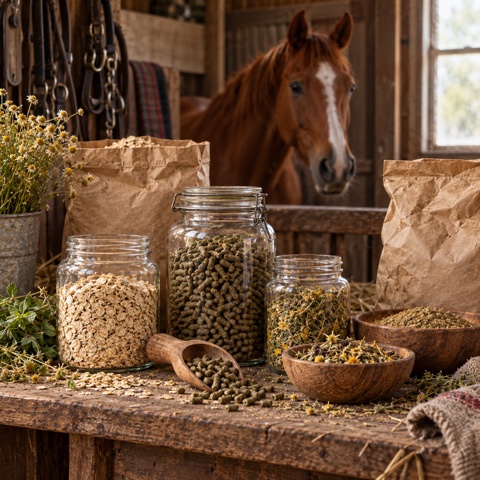
Balance type compound - for use with oats or other farm feeds, e.g. beet pulp.
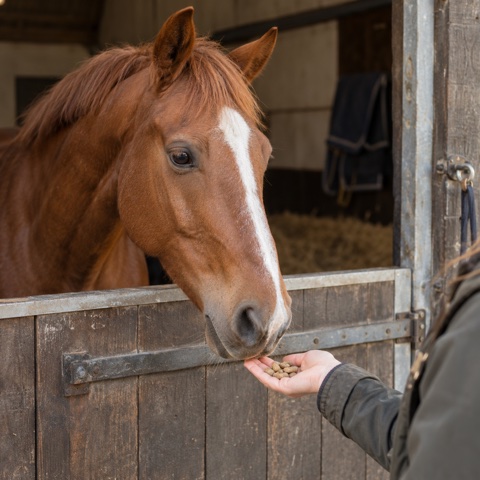
Serve approximately 300 ÷ 500 g feed on 100kg horse weight daily.
Example of daily dose for horse of weight 500 kg It's 1,5 ÷ 2,5 kg feed, 1,5 ÷ 3 kg farm feed plus hay in minimum amount 1,5 % ÷ 2,5 % his body weight. The mix was balanced with hay with averaged parameters.
Tips:
-dose should be adjusted to the condition, weight training and individual needs of the horse
-when using Nuba Musli feed less than recommended, the daily dose should be supplemented with vitamin-mineral supplement Equina Meganutril -> link to supplement
-feeds should be administered by weight, not by volume
-it is not recommended to administer more than 2 kg feed for one meal (for a horse of weight 500 ÷ 600 kg , smaller horses, respectively)
- Check regularly that the horse has access to clean water
- Horses should have constant access to volumetric feed
- give horses access to salt lick and control its intake
-to the horse's diet new products should be introduced gradually
-complete feed may also be used as a dietary basis in combination with additional feed or feed additives, provided that the daily dose is appropriately balanced
Composition:
Dried meal alfalfa
Dried apple marc
Flaked soya (thermically) [GMO free]
Flaked barley (thermal micronised)
Wheat bran
Sunflower husks
Linseed expeller
Linseed (extra)
Dried grass meal
Feed yeasts
Barley bran
Chaff dried alfalfa
Calcium carbonate
Magnesium oxide
Calcium phosphate
Dried carrots (extra-flakes)
Dried beet (extre-flakes)
Sodium chloride
Lignite oil
Aminoacid zinc chelate [E4]
Marine algae
Tocopheryl acetate (Wit E) [3a700]
Lizyna
Amino acid copper chelate [E6]
Amino acid chelate of Selenium [E8]
Beta Karoten (Wit A)
Biogen probiotic
Cholecalciferol (Wit D3) [E671]
Analytical constituents (in 1kg feed):
Energy digestible - 11,3 MJ
Raw Protein - 163 g
Lizyna - 10,8 g
Raw fibre - 12,4 %
Raw fat - 9,3 %
Ash — 4,7 %
Starch — 15,6 %
Simple Sugars (ESC) — 3,6 %
Calcium (Ca) - 14 g
Phosphorus (P) - 7 g
Magnesium (M) - 13 g
Potassium (K) - 9,3 g
Sodium (Na) - 5,4 g
Chlorine (Cl) — 9,2 g
Iron (Fe) - 182 mg
Copper (Cu) - 197 mg
Zinc (Zn) - 600 mg
Manganese (Mn) - 44 mg
Selen (Se) - 1,1 mg
Jod (I) — 2,1 mg
Additives for 1 kg feed:
Vitamin A (as Beta Karoten) - 30000 IU
Vitamin D - 3820 IU
Vitamin E - 700 mg
Amino acid copper chelate – 187 mg
Amino acid chelate zinc — 555 mg
Amino acid chelate of selenium — 1 mg
The above data should be considered in combination with average quality hay, as the mixture has been balanced with volumetric feed in quantities taking into account the age of the horse.
NUBA EQUI PAWEŁ PĘKALA
Krąg 27
83-200 Starogard Gdański PL
NUBA EQUI PAWEŁ PĘKALA
Krąg 27
83-200 Starogard Gdański PL


check_circle
check_circle












Your review appreciation cannot be sent
Report comment
Report sent
Your report cannot be sent